My Account


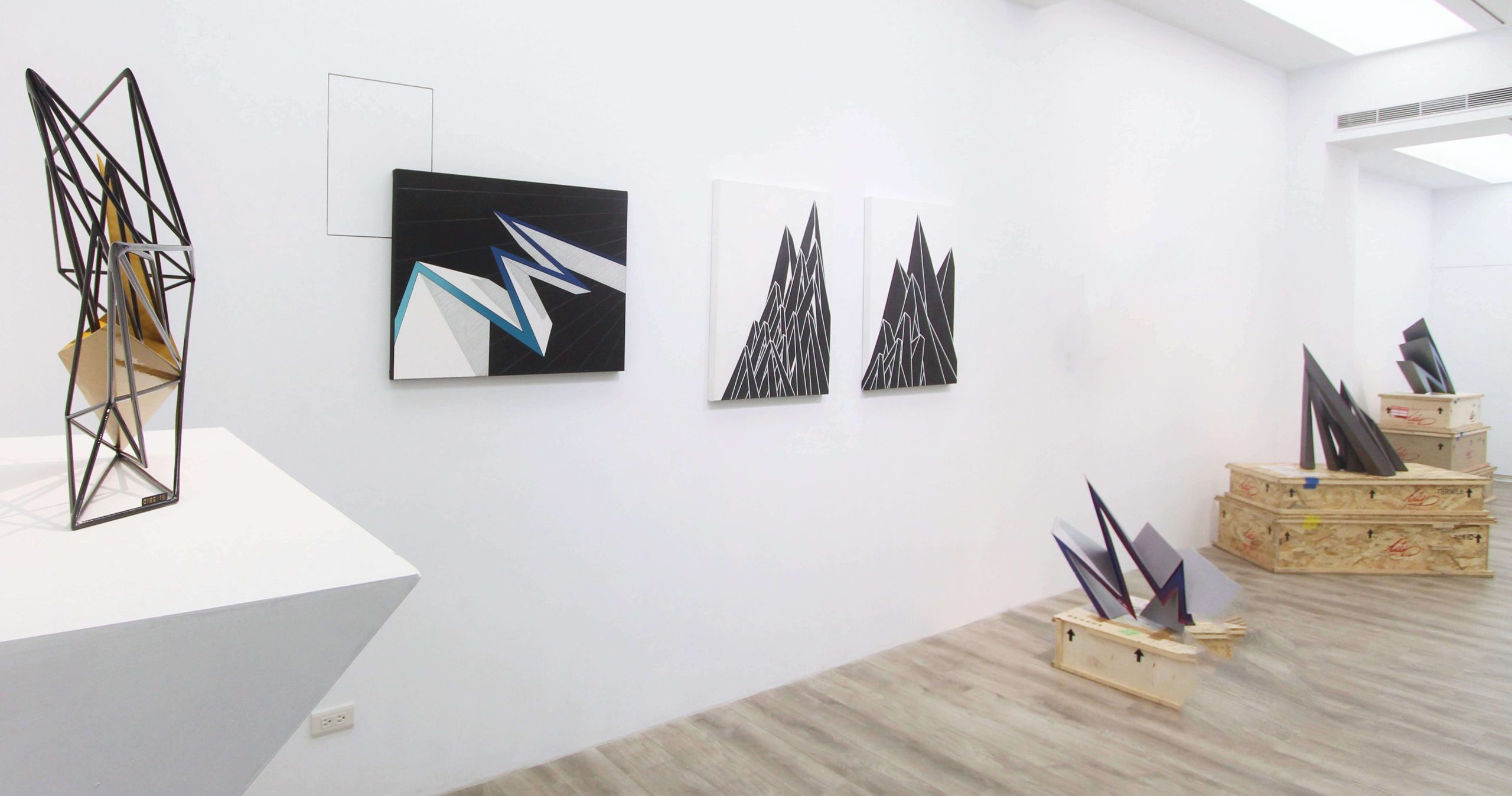
GALERIE OVO has long followed artistic trends in Taiwan and abroad, while continuing to engage in multilateral cultural exchange. In 2021, continuing its cross-border collaboration with curator Geraud Jean Claude, the gallery invited French artist Stéphane Cies Cloteau (b. 1983) to present his solo exhibition SINGULARITÉ.
The French title SINGULARITÉ refers to a “singular point,” a mathematical term that describes a non-smooth turning point on the curve of a function. As a concept marked by particularity, the singular point has often served as a subject of inquiry in relation to time and space. The term resonates with Stéphane’s aesthetic practice, which is constructed through scientific calculation, while also serving as an appropriate title for the artist’s first presentation of works in Taiwan after many years of artistic activity in Europe.
Stéphane’s rich life experience has given him multiple identities. His grandfather’s work as a carpenter introduced him at an early age to space, geometry, and handcraft. His education and professional experience as an architect gradually equipped him with the ability to interpret inspiration through logic and structure. Meanwhile, his love of hip-hop music and street graffiti opened the way toward a more personal mode of artistic creation.

Stéphane Cies Cloteau, TURBULA, patinated and varnished steel sheets, 90L × 66H × 15D cm. Photo by Art Emperor.
Stéphane was raised in Marseille, France, a city known for its passionate and vibrant character. Yet his artistic style differs from the common global impression of the French or Latin temperament as romantic and uninhibited. Each of Stéphane’s paintings and sculptures is developed through precise scientific calculation during the preparatory process. As a result, inspirations drawn from engineering and nature are transformed in his hands into aesthetic objects that combine rationality and sensibility, creating a refreshing visual experience.

Stéphane Cies Cloteau, Entre les arbres de la forêt. Image courtesy of GALERIE OVO.
Looking back at the early phase of Stéphane’s artistic practice, he once developed a series of projects centered on “constructing artificial spaces within natural spaces.” Focusing on layered spatial structures, he used simple nails and threads to create a point of rupture within habitual perception. These works offered an engaging exploration of the relationships between humans and space, inside and outside, nature and the artificial. They embodied an unexpected yet comprehensible spatial perspective, reflecting Stéphane’s ongoing inquiry into how the virtual and the real exist.
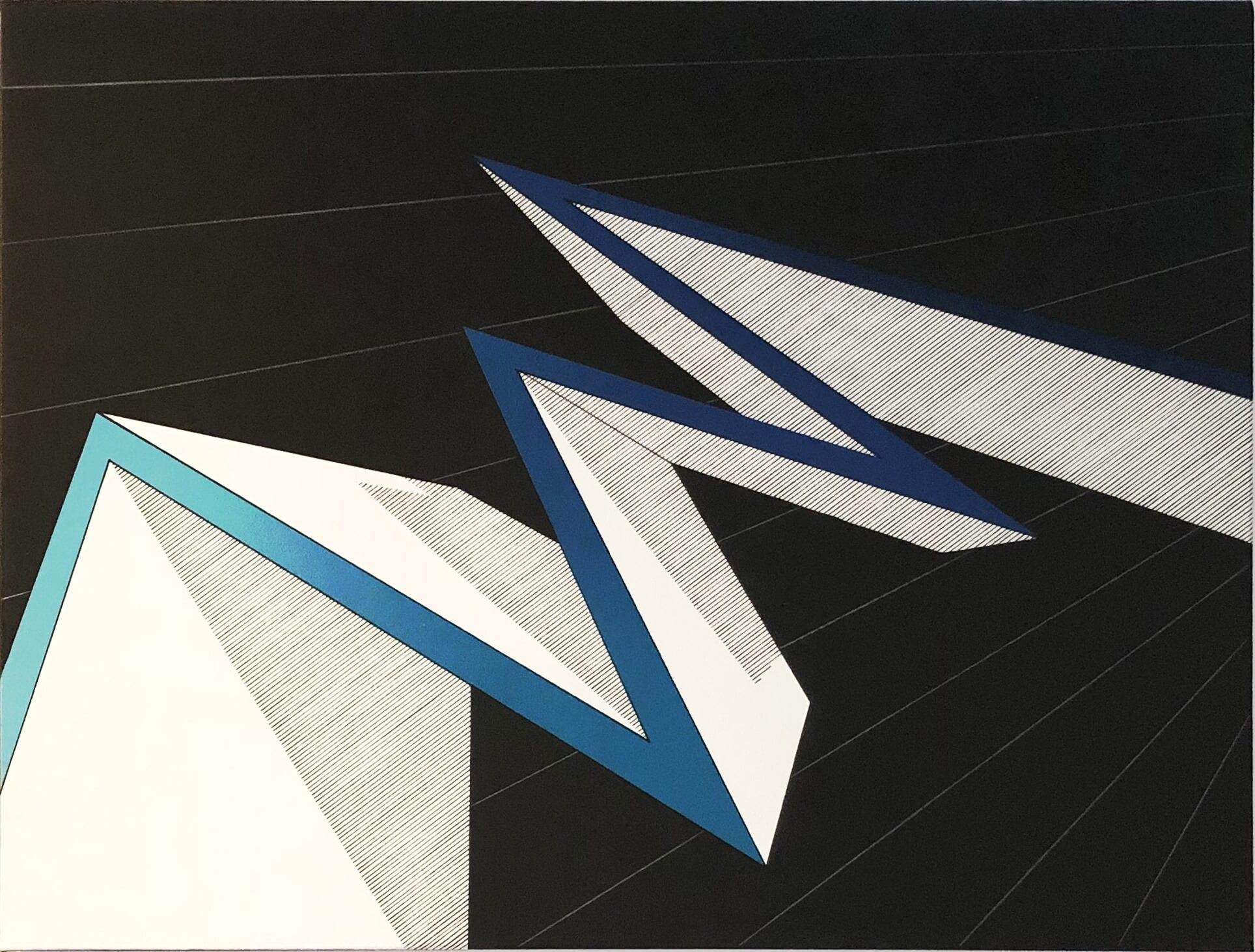
Stéphane Cies Cloteau, Transition, acrylic and spray paint on canvas, 60 × 80 cm. Image courtesy of GALERIE OVO.
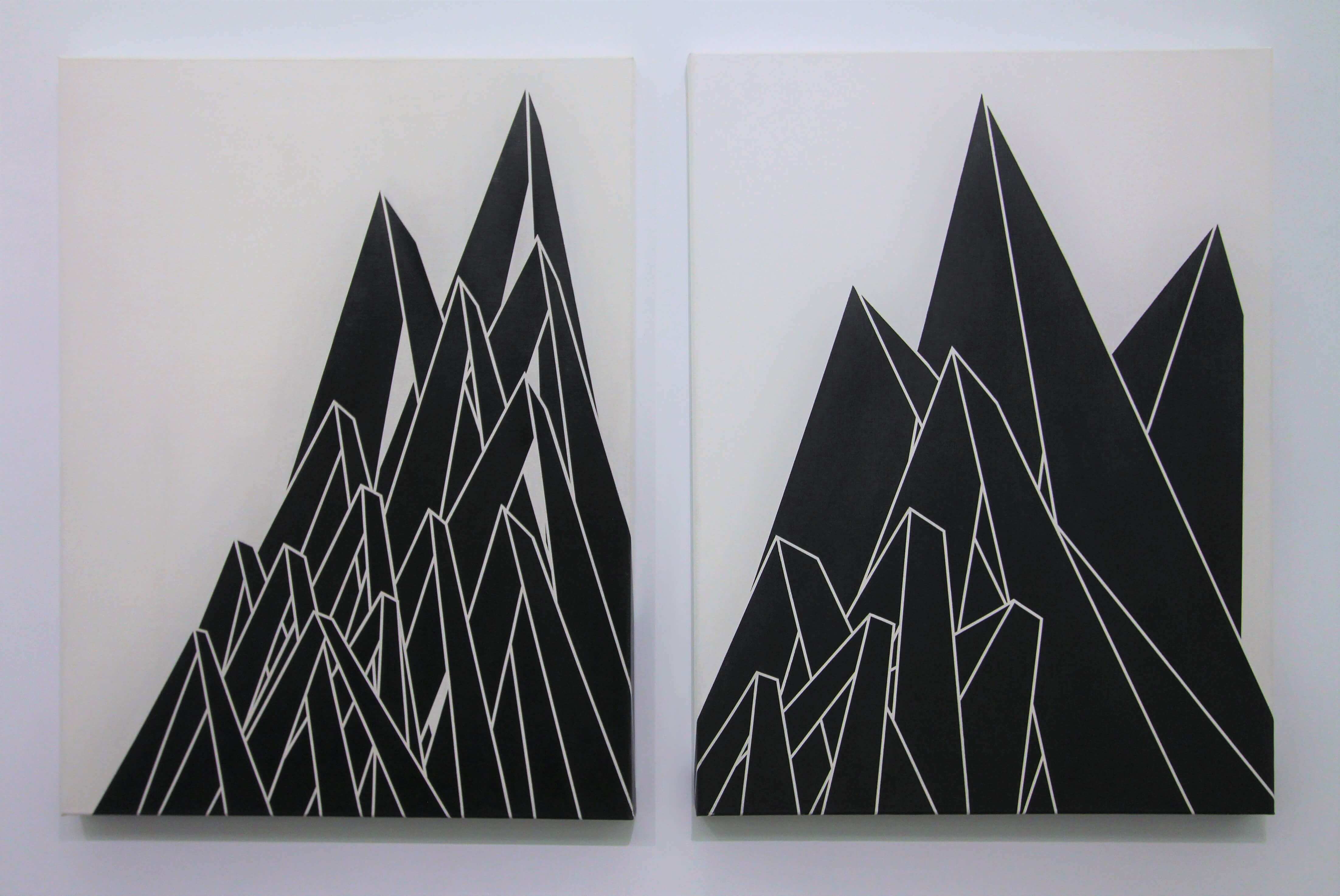
Stéphane Cies Cloteau, left: Just Behind / right: Transition, acrylic on canvas, 60 × 80 cm. Photo by Art Emperor.
How, then, can diverse experiences of space be condensed into a single plane? When viewing Stéphane’s paintings, one first senses the influence of street graffiti. Within rigorous geometric structures, he transforms graffiti-like brushwork into something three-dimensional, even dynamic. Unlike the misted edges of spray paint, Stéphane employs hard edges, linear structures, and gradients, reorganizing elements associated with spray paint and gestural marks into a new visual form. Visually, his works carry the bright rhythm of animation, forming a perspective that is both intriguing and thought-provoking.

Stéphane Cies Cloteau, AJONE, painted and varnished steel sheets, 60L × 62H × 20D cm. Photo by Art Emperor.
Following principles of engineering and physics, Stéphane’s sculptures maintain a high degree of stability even when they appear to be on the verge of collapse. His wall-mounted works, too, often require only a single hanging point to achieve a natural balance. The vivid visual effect reminiscent of graffiti is also a defining feature of Stéphane’s work. He uses techniques such as baked enamel paint and enamel firing to apply color, creating subtle gradients that reveal a stable and elegant quality.
To view Stéphane’s sculptures is to enter an intersecting spatial field in which one may imagine oneself physically present. His works invite viewers to experience a shifting viewpoint, one that can expand and contract, advance and recede.